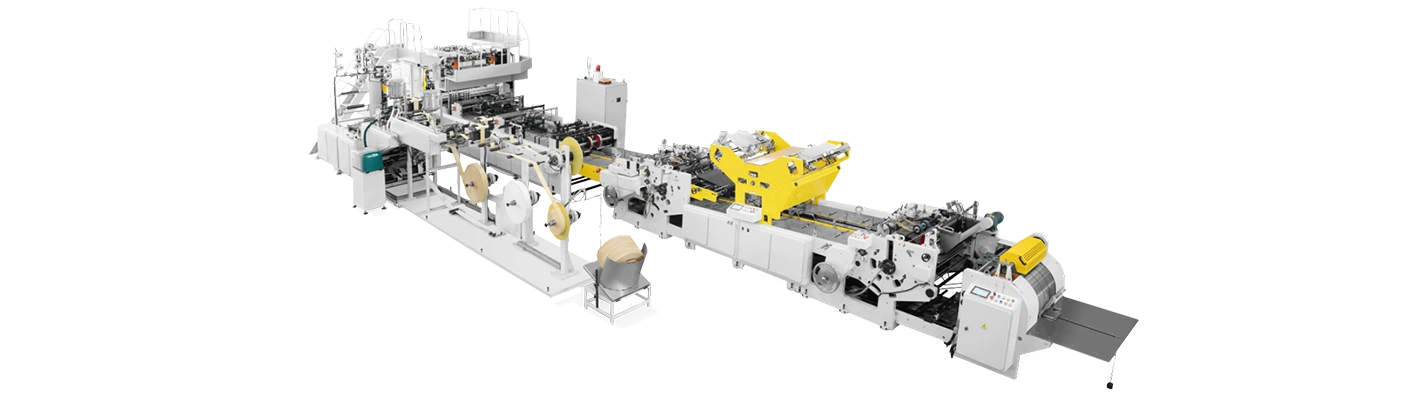
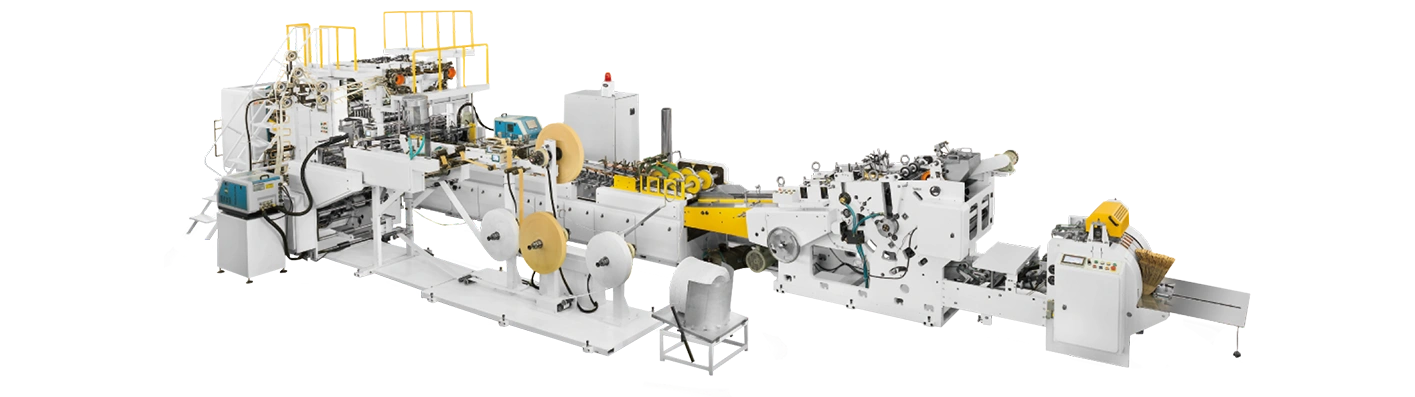
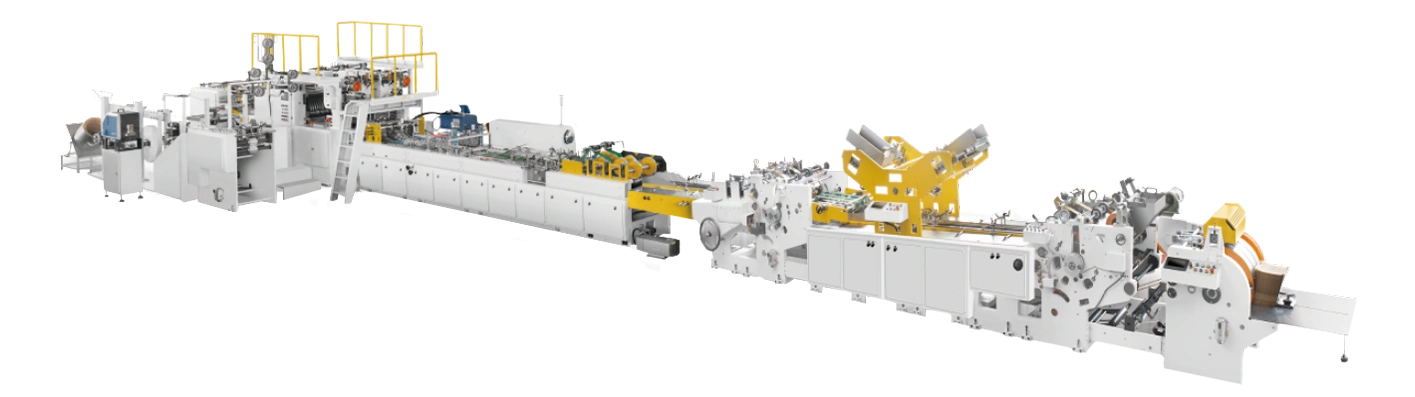
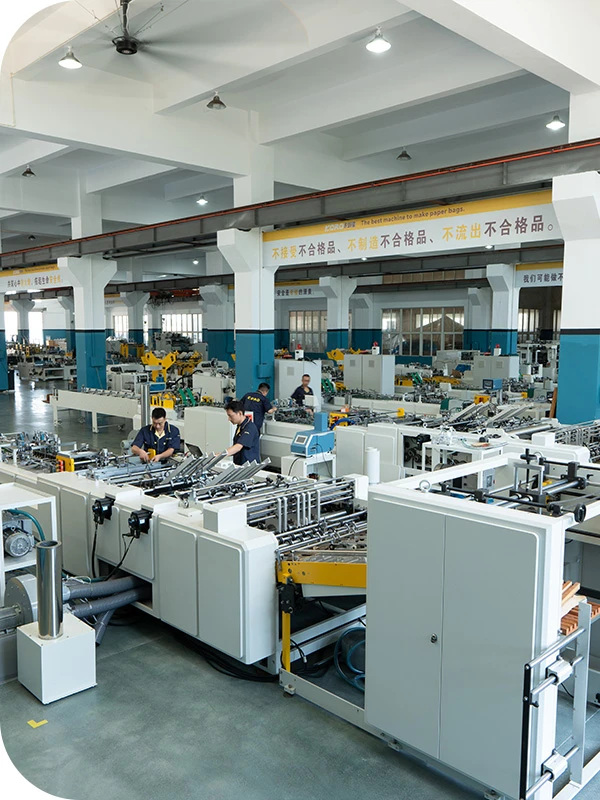
If you have been searching for a fully automatic paper bag machine online, you have probably noticed something frustrating: prices vary wildly. One supplier quotes $50,000, another asks $150,000, and a third one will not give you a number at all until you send an inquiry.
So what is actually going on here? Is the expensive machine simply overpriced? Is the cheap one a bargain or a disaster waiting to happen?
A fully automatic paper bag making machine is a serious capital investment. Pick the right one, and your production line runs smoothly for years. Pick the wrong one, and you deal with constant breakdowns, inconsistent bag quality, and maintenance bills that eat into your margins.
Understanding what drives the price of a paper bag production machine matters more than just comparing quotes. Here is what actually determines the cost.
Automation Level: The Biggest Price Divide
The single most important factor separating a $20,000 machine from a $120,000 machine is the level of automation.
A semi-automatic paper bag making machine requires three to five operators. Someone feeds the paper, someone applies glue, someone collects and stacks the finished bags. These machines typically run at 30 to 80 bags per minute and cost between $5,000 and $45,000. They work for small workshops, but they do not scale well.
A fully automatic paper bag machine, by contrast, handles the entire process in one continuous line: unwinding, tube forming, side gluing, cutting, bottom forming, counting, and stacking. One or two operators oversee the process rather than run it. Speeds range from 80 to over 200 bags per minute, with prices starting around $50,000 and climbing past $300,000 for high-speed models with integrated handle systems.
Think of it like the difference between a manual transmission car and one with adaptive cruise control. Both get you where you are going, but one demands constant attention and skill while the other optimises the journey on its own. The fully automatic machine costs more upfront because it replaces labour, reduces variability, and runs longer without stopping.
Production Speed: The Output-Price Multiplier
Speed is the most direct price multiplier. A machine running at 150 bags per minute can easily cost 50% more than an 80-bag-per-minute model with otherwise identical specs.
Here is why that premium makes sense. At 150 bags per minute instead of 80, you produce roughly 33,000 more bags per eight-hour shift. If each bag nets $0.015 in profit, that is an extra $495 per day, or roughly $180,000 per year. The faster fully automatic paper bag making machine often pays for its price premium within months.
Entry-level models produce 30 to 80 bags per minute and typically cost $5,000 to $45,000. Mid-range machines run at 80 to 150 bags per minute and cost $50,000 to $160,000. High-speed industrial models produce 150 to 250-plus bags per minute and can cost $160,000 to $500,000 or more.
The question is not whether you can afford the faster machine. The question is whether you can afford not to have it once your order volume grows.
Handle Integration: Adding Complexity, Adding Cost
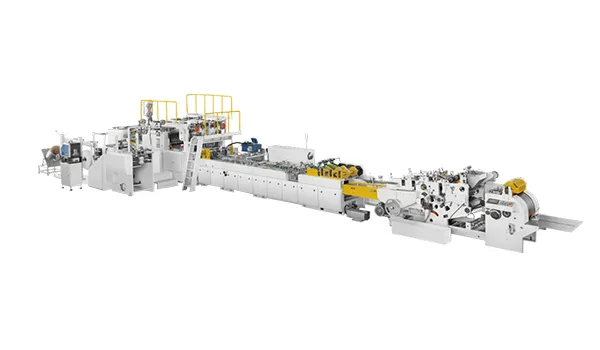
A fully automatic paper bag machine that produces flat, handle-less bags is one thing. A machine that integrates twisted rope handles, flat handles, or luxury card reinforcements directly into the production line is another.
Handle integration adds significant cost because it requires additional stations: handle forming, handle cutting, handle pasting, and handle positioning. These stations need their own servo motors, control systems, and precision mechanisms. A square-bottom paper bag machine with handle integration typically costs between $142,500 and $160,000. A fully automatic roll-fed paper bag machine with handles ranges from $55,000 to $85,000, while a sheet-fed luxury paper bag machine with card reinforcement can run $80,000 to $110,000.
This is where the configuration of your paper bag production machine directly affects the bottom line. If your customers require handled shopping bags, you need a machine that can handle that complexity. If you only produce simple flat bags, paying for handle integration is unnecessary.
Servo Systems and Component Quality
Not all fully automatic paper bag machines are built the same way, even when the speed and bag size specs look identical.
Machines equipped with advanced servo control systems cost more upfront but offer long-term reliability and precision. A full-servo paper bag machine uses independent servo motors to control each station: the feeding unit, the cutting unit, the handle making unit, the handle pasting unit, and the pre-indentation unit. Some high-end models use 16 servo motors in total.
What does this mean for your daily operation? Precise control means less waste—typically under 1% for full-servo systems. It means faster changeovers between bag sizes. It means fewer mechanical adjustments and less downtime.
A machine with basic mechanical drives and a simple PLC controller will cost less. But it will also require more frequent maintenance, produce more scrap, and struggle to maintain consistent quality at higher speeds. The fully automatic paper bag making machine price reflects these engineering choices, and skimping on servo systems often costs more in the long run.
Bag Type and Size Range Versatility
A machine that can only produce one bag size is cheaper than a machine that handles a wide range.
If your fully automatic paper bag machine needs to switch between 4-ounce and 16-ounce bags, or between flat-bottom and square-bottom designs, you are paying for versatility. Adjustable moulds, expandable paper feed widths, and quick-change mechanisms all add to the manufacturing cost.
The trade-off is straightforward: a more versatile paper bag making machine lets you respond to changing customer demands without buying additional equipment. If your business serves multiple market segments—retail, food service, luxury goods—the flexibility is worth the premium.
After-Sales Support and Warranty: The Hidden Cost Factor
Here is something many buyers overlook: the cheapest quote often comes with the weakest support.
A fully automatic paper bag machine is only as good as the support behind it. Does the manufacturer provide on-site installation and training? Do they stock spare parts locally? What is the warranty period, and what does it actually cover?
Reputable manufacturers offer a one-year warranty on the entire machine, with wearing parts supplied at no charge for the first year. They provide technical training, remote support, and respond to service requests within 24 hours. These services cost money to deliver, which is reflected in the machine price.
Ultra-low prices often come with poor quality or lack of service, leading to costly downtime or premature replacement. When you compare quotes for a fully automatic paper bag making machine, look beyond the initial number. Ask about warranty terms, spare parts availability, and response times for technical support. A machine that costs 20% more but runs for an extra five years is the better investment.
Sheet-Fed vs. Roll-Fed: Different Feeding, Different Pricing
The feeding mechanism also influences the price of your paper bag production machine.
Sheet-fed machines take pre-cut paper sheets and form them into bags. They offer greater flexibility for short runs and custom sizes, but they require an additional step—cutting the sheets before feeding. Roll-fed machines take paper directly from a roll, form the tube, cut, and finish in one continuous process. They are faster and more efficient for high-volume production, but they cost more upfront.
A fully automatic roll-fed paper bag machine typically ranges from $55,000 to $85,000. A sheet-fed luxury paper bag machine with similar capabilities can run $80,000 to $110,000. The right choice depends on your raw material sourcing and production volume.
Summary
Choosing a fully automatic paper bag machine is not just about picking equipment. It is about setting up your production line for consistent output, manageable maintenance, and the flexibility to grow with your business.
What to take away:
- Automation level is the biggest price factor—fully automatic machines start around $50,000 and go up from there
- Higher speed commands a higher price, but the faster machine often pays for itself within months
- Handle integration, servo systems, and versatility all add to the cost—and the value
- After-sales support and warranty matter as much as the machine itself
- Sheet-fed vs. roll-fed is another key pricing variable
Need a Quote That Matches Your Production Goals?
Whether you are still deciding between sheet-fed and roll-fed, or you already know exactly what you need, we can help. Contact our team to discuss your output targets, bag types, paper stock, and any custom configuration needs for your next fully automatic paper bag machine.
At KORO, we design and manufacture paper bag production machines for businesses that care about quality, reliability, and long-term value. From entry-level models to high-speed industrial systems—including configurations that integrate seamlessly with your existing box assembly machine setup—we provide solutions tailored to your production line. And if you are running a box assembly machine alongside your bag line, we can help you coordinate the workflow for maximum efficiency. Whether you need a standalone fully automatic paper bag making machine or a complete packaging system that includes a box assembly machine, we have the expertise to guide your decision.