When you are in the market for a paper bag machine, the first major decision you will face is whether to go with roll-fed or sheet-fed technology. Both produce paper bags. Both can be automated. But the way they operate, the volumes they support, and the types of bags they can produce are fundamentally different.
Choosing the wrong feeding method for your production line means either paying for capacity you do not need or struggling to fulfill orders you cannot keep up with. This guide breaks down the real trade-offs between roll-fed and sheet-fed paper bag machines using actual production data, so you can match the equipment to your order book—not the other way around.
Understanding the Core Difference
The distinction between a roll-fed and a sheet-fed paper bag machine comes down to one thing: how paper enters the machine.
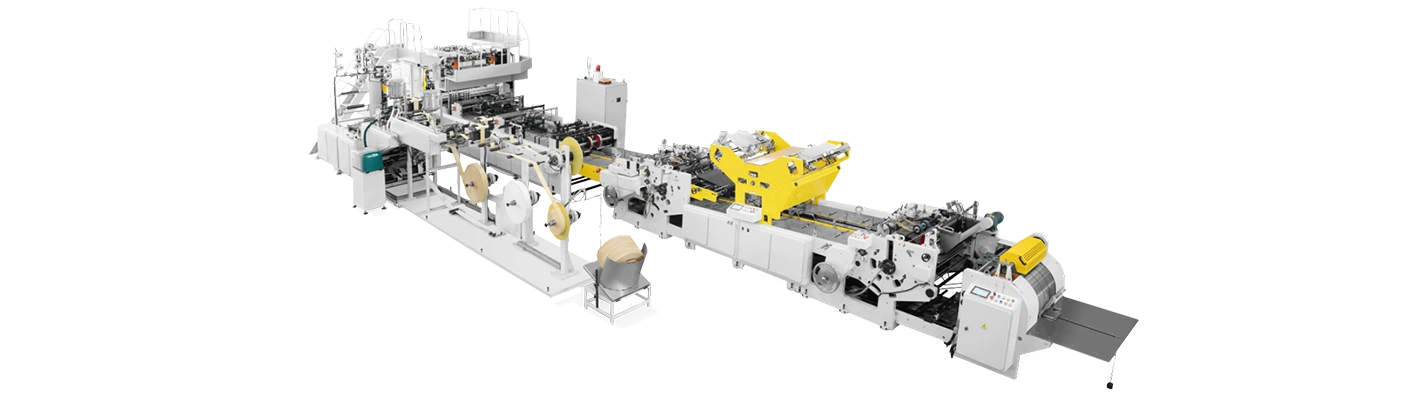
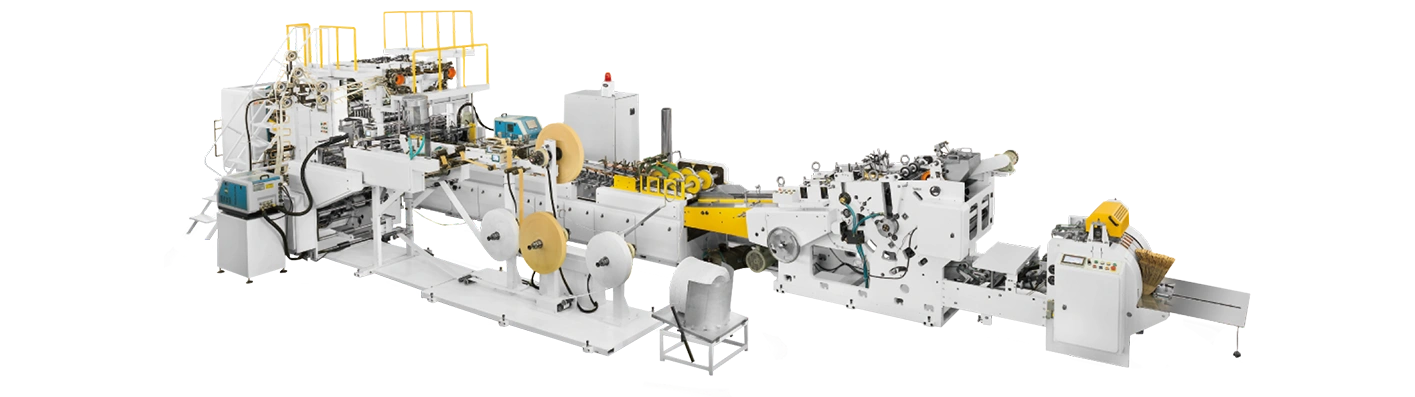
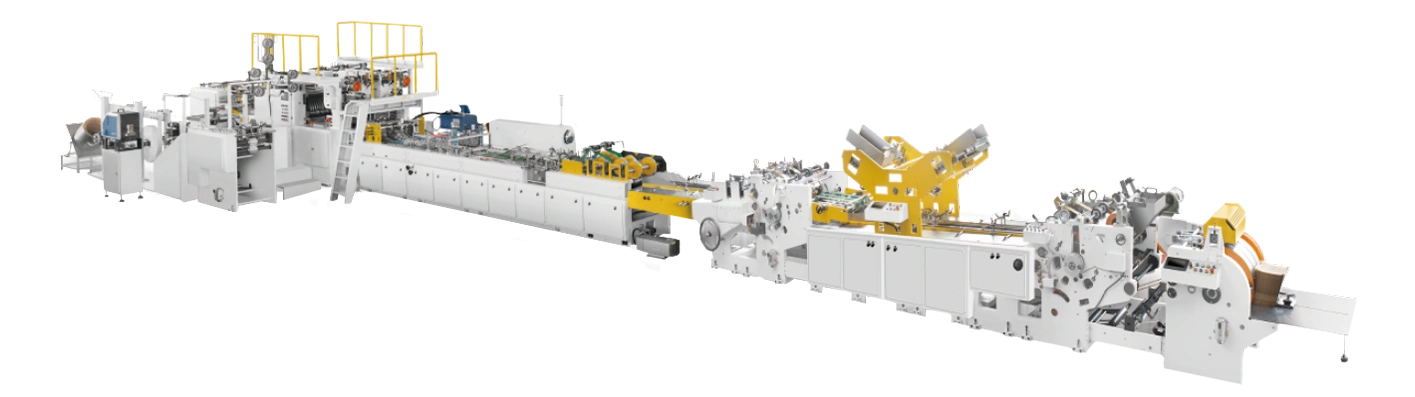
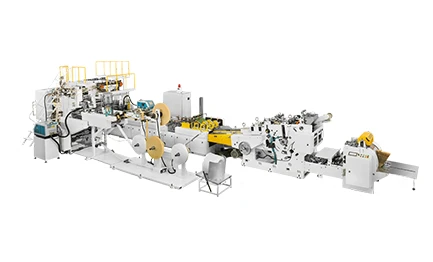
A roll-fed paper bag machine starts with a continuous roll of paper—typically kraft, coated, or specialty paper wound onto a core. The machine unwinds the paper, feeds it through forming stations, cuts it to length, folds the bottom, applies glue, and ejects the finished bag all in one seamless, continuous process. Think of it as a high-speed assembly line that never stops.
A sheet-fed paper bag machine, by contrast, starts with pre-cut individual sheets stacked in a pile. Each sheet is fed into the machine one at a time and processed through forming, folding, gluing, and bottom sealing stations. This is closer to a batch process where precision matters more than raw speed.
Both approaches produce quality bags. But the workflow, output capacity, and operational costs differ significantly.
Production Speed and Volume: Who Wins for Large Orders?
If your business runs high-volume orders for standard shopping bags, grocery sacks, or e-commerce packaging, a roll-fed paper bag machine is difficult to beat.
Modern roll-fed systems can run at 200 to 350 bags per minute for standard carrier bags, with some high-end models reaching over 400 bags per minute. Fangbang's ZD-FJ06 roll-fed square-bottom machine, for example, achieves up to 260 bags per minute. Once the roll is loaded, the operation runs automatically until the roll depletes.
Sheet-fed machines operate more slowly—typically 40 to 80 bags per minute for handleless models, and up to 120 bags per minute depending on bag size and bottom style. Each sheet must be aligned, fed, folded, and glued individually.
The slower pace, however, allows for more intricate bottom reinforcements and handle configurations that are harder to achieve on a roll-fed line. If your monthly volume exceeds one million bags, roll-fed is the clear winner. For smaller shops or custom packaging studios producing high-end handbags in shorter runs, sheet-fed's lower minimum order quantity and greater versatility are more practical.
Material Flexibility: What Papers Can Each Machine Handle?
This is often the decisive factor. The papers you plan to run determine which feeding method is even viable.
Roll-fed paper bag machines typically handle lighter paper stocks because the paper must withstand the tension of unwinding from a roll without tearing. Most roll-fed models accommodate paper thickness from 45 to 170 gsm, depending on the specific configuration. They work well with kraft paper and PE-coated food paper.
Sheet-fed paper bag machines can handle significantly heavier stocks—up to 250 gsm on compatible models. They also accept specialty papers that cannot be wound onto rolls, such as coated art paper, laminated board, and heavily printed sheets. If you plan to produce premium bags with unique finishes or custom-printed designs on thick, stiff paper, a sheet-fed paper bag machine gives you the material flexibility you need.
Material Waste: The Hidden Cost
Waste is rarely top of mind when comparing machine prices, but it should be.
Roll-fed systems produce a longitudinal overlap seam and trim the side edge of the paper to maintain a straight web. Total paper waste typically runs 3 to 6 percent of the input roll, including setup waste at roll changes.
Sheet-fed paper bag machines create no side trim waste because sheets are already cut to final width. Waste comes only from test samples, setup rejects, and occasional misfeeds—usually 1 to 2 percent. For expensive specialty papers like kraft with wet-strength coating or recycled colored paper, that lower waste percentage can save thousands of dollars per month.
On the other hand, sheet-fed requires accurate pre-cutting. If your pre-cutting step creates dust or poor alignment, you trade waste for handling headaches. Ask your potential supplier about register control between print and bag bottom—a poorly registered sheet line can produce 10 percent scrap regardless.
Changeover Time: Flexibility for Short Runs
If your business handles frequent job changes with different bag sizes, this is where sheet-fed shines.
Changing bag length on a sheet-fed paper bag machine means adjusting folding plates and glue applicators—typically 15 to 30 minutes. Changing bag width? You simply use a different sheet size. No need to replace a forming tube or unwind stand.
On a roll-fed system, changing bag dimensions often requires swapping the forming tube and making mechanical adjustments that take significantly longer. For manufacturers running the same bag size day after day, this is not an issue. For those handling diverse orders with frequent size changes, the faster changeover time on a sheet-fed paper bag machine translates directly to less downtime and more productive hours.
Floor Space and Facility Requirements
Space is another practical consideration.
Roll-fed lines typically occupy more linear floor space—25 to 35 meters for a full roll-fed line including unwind and splicer. Sheet-fed lines are more compact, usually 15 to 20 meters.
However, sheet-fed requires additional space for sheet storage, pallet staging, and manual stacking of finished bags if no automatic stacker is installed. Factor in both machine footprint and material storage when planning your facility layout.
Investment and Cost Per Bag
High-speed roll-fed equipment often costs 30 to 50 percent more upfront than a comparable sheet-fed line for the same bag complexity. The initial price tag is higher.
But the cost per bag at full utilization is lower for roll-fed. Higher production speeds spread the machine cost across more units, reducing the per-bag expense. For high-volume operations, that lower unit cost justifies the larger investment.
For smaller operations or businesses just entering paper bag manufacturing, a sheet-fed paper bag machine offers a lower barrier to entry with a more modest upfront investment.
Which Paper Bag Machine Is Right for You?
There is no single right answer—only the right answer for your specific production reality.
A roll-fed paper bag machine is the right choice if:
-
Your monthly volume exceeds 200,000 bags
-
You run standard bag sizes with few changes
-
You use lighter paper stocks (up to 170 gsm)
-
You want the lowest possible cost per bag
A sheet-fed paper bag machine is the right choice if:
-
Your monthly volume is under 200,000 bags
-
You handle frequent size changes and diverse orders
-
You use heavier or specialty papers (up to 250 gsm)
-
You produce premium bags with custom finishes
-
You want faster changeover times and lower material waste
Summary
Choosing between a roll-fed and a sheet-fed paper bag machine is not just about picking equipment. It is about matching your production capacity to your order volume, your material requirements to the machine's capabilities, and your investment to your actual growth trajectory.
Roll-fed paper bag machines deliver unmatched speed and the lowest per-bag cost for high-volume, standard-bag production. Sheet-fed paper bag machines offer superior material flexibility, faster changeovers, and lower waste for specialty and short-run orders.
Both technologies have their place. The key is knowing where your business fits.
Ready to Find Your Paper Bag Machine?
Whether you are scaling up for high-volume retail orders or building a flexible production line for custom bags, the right paper bag machine starts with understanding your requirements.
Contact our team to discuss your monthly volume, target bag sizes, and paper stock. We will help you compare roll-fed and sheet-fed paper bag machine configurations side by side and recommend the solution that fits your production goals.
[Contact Us for a Custom Quote]