If you have spent any time running a paper handle paper bag making machine, you already know the frustration. Glue splatters across the paper surface, ruining a batch that took twenty minutes to set up. Handles pull loose in the customer's hand—sometimes before the bag even leaves the shop. These are not minor annoyances. They are production killers that eat into margins, damage brand reputation, and keep maintenance crews busy when they could be doing something more productive.
Glue-related issues account for more than 40% of downtime on paper bag production lines. That is a staggering number. But here is the thing: most of these problems are preventable. Not with better glue, not with more frequent cleaning—but with a paper handle paper bag making machine designed from the ground up to handle adhesive application the right way.
Why Glue Splashing Happens on a Paper Handle Paper Bag Making Machine
The cause is straightforward. Traditional glue application systems use rotating rollers to transfer adhesive onto the handle or paper surface. At low speeds, this works well enough. But as production speeds increase—and they need to, to stay competitive—those rollers spin faster. The centrifugal force throws glue off the roller surface. It splashes onto adjacent components, onto the paper itself, and eventually onto the finished bags.
The mess is not just visual. Glue that lands where it does not belong creates adhesion problems elsewhere. It can cause layers to stick together improperly, leading to scrap. It builds up on rollers and hardens, requiring time-consuming cleaning that pulls operators away from production.
There is also the issue of glue consistency. When adhesive sits exposed in an open glue pot, it degrades. Water-based glues lose moisture. Hot melts begin to break down from prolonged heating. The result is uneven viscosity—sometimes too thick to flow properly, sometimes too thin to hold. Either way, handle attachment suffers.
The Real Cost of Weak Handle Attachment
Weak handle attachment is the other side of the same coin. It is not always caused by glue splashing. Sometimes the problem is insufficient pressure during the bonding process. Sometimes it is uneven glue distribution—too much in one spot, not enough in another. Sometimes the adhesive is simply the wrong type for the paper stock being used.
Whatever the cause, the result is the same: handles that fail under load. A twisted rope handle that pulls free from a shopping bag mid-carry. A flat handle that separates from the bag mouth after a few swings. These failures do not just cost you the bag itself. They cost you the customer's trust. In retail packaging, reliability is non-negotiable.
The financial impact adds up fast. Scrapped bags, rework, customer complaints, lost repeat business—all traceable back to a glue system that is not performing as it should.
What a Well-Designed Glue System Looks Like
The solution is not complicated, but it does require a different approach to machine design. A paper handle paper bag making machine that prevents glue splashing and ensures strong handle attachment typically incorporates several key features.
Controlled adhesive application. Instead of open rollers that fling glue everywhere, precision glue dispensing systems deliver adhesive exactly where it is needed—and nowhere else. This means less waste, less cleanup, and fewer opportunities for glue to end up on the wrong surface.
Independent glue system operation. One of the smarter design choices found on modern machines is the ability to run the glue system independently after the main machine stops. This prevents adhesive from drying and hardening inside nozzles and lines, eliminating the clogs that cause uneven application and downtime.
Consistent bonding pressure. Adhesive alone does not create a strong bond. Pressure does. The handle must be pressed against the bag surface with sufficient force and for sufficient duration to allow the glue to penetrate and set. Inconsistent pressure leads to inconsistent bond strength—and that leads to handles that pull free.
Material compatibility. Not all paper stocks accept glue the same way. Laminated papers, coated stocks, and heavier GSM papers all behave differently. A versatile paper handle paper bag making machine should accommodate a range of materials without requiring extensive adjustment.
The H Series Approach to Glue Reliability
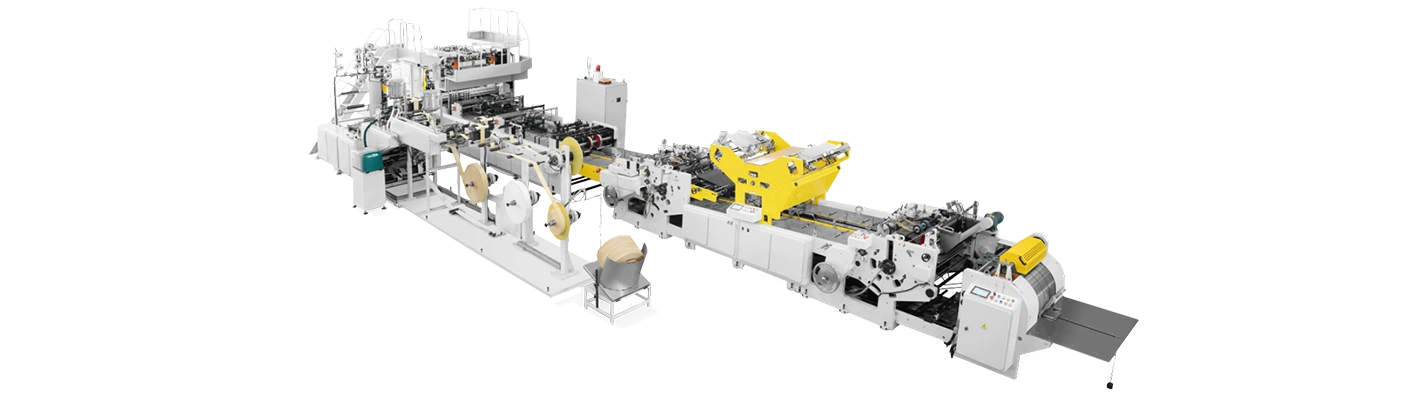
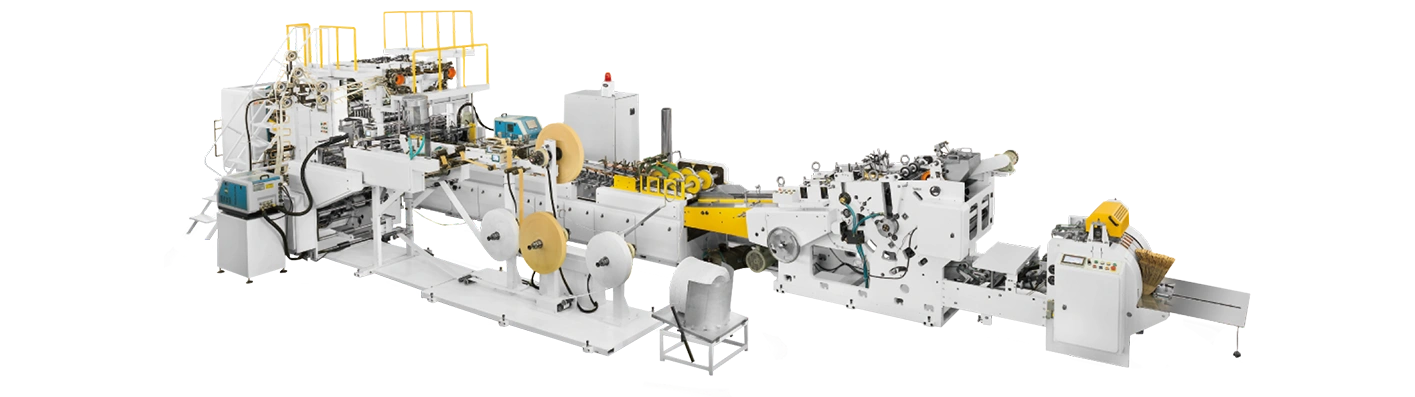
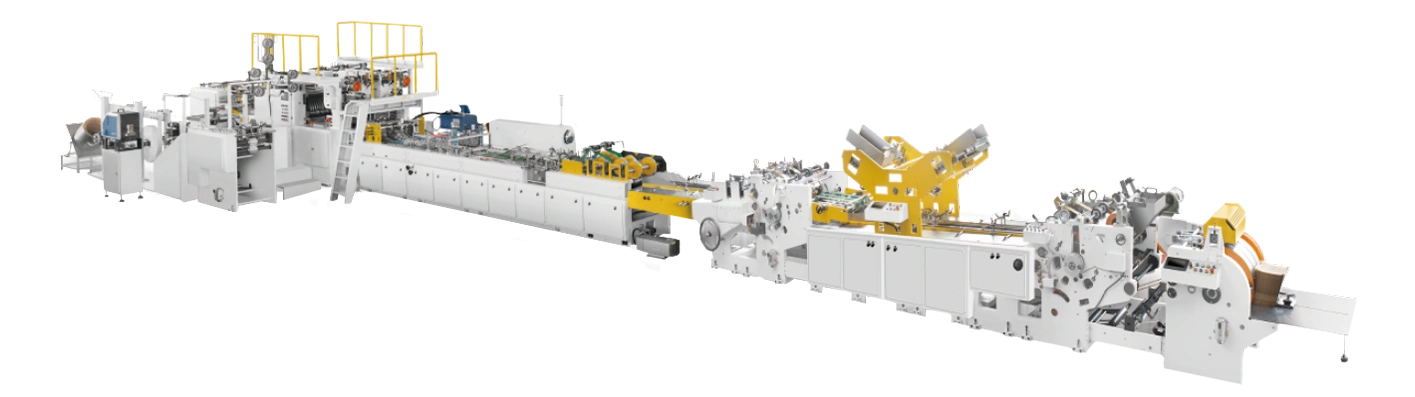
KORO's H Series and HHB models address these challenges directly. The sheet-fed paper handle paper bag making machines in this range are designed with full servo control, which allows for precise coordination between the glue application system and the handle placement mechanism. When the machine stops, the glue system can be kept running briefly to prevent drying and clogging—a small detail that makes a significant difference in daily operation.
The stacked design of the HH and HHB models also contributes to glue reliability. By integrating twisted rope and flat handle production in a single machine with a 15-minute changeover time, operators spend less time adjusting and recalibrating the glue system between runs. Fewer adjustments mean fewer opportunities for glue application errors.
For manufacturers producing large-volume orders, the Model 450 offers a maximum bag width of 220mm—4cm wider than the industry standard of 180mm. This extra width capability does not directly affect glue application, but it does mean the machine can handle the larger bag sizes that are increasingly in demand for takeaway and bakery applications, all while maintaining consistent glue performance.
What to Look for in Your Next Paper Handle Paper Bag Making Machine
If you are evaluating a paper handle paper bag making machine, here are the questions to ask about the glue system:
How is glue applied? Roller systems are the traditional choice, but they are also the source of most splashing problems. Look for machines with controlled or sealed glue application systems.
What happens when the machine stops? If the glue system shuts down immediately with the main drive, you will be dealing with dried adhesive in the nozzles every time you restart. Independent glue system operation is a feature worth prioritizing.
What is the bonding pressure system? Pneumatic, hydraulic, or servo-controlled? Servo-controlled pressure systems offer the most consistent results across varying production speeds.
What paper weights and coatings are supported? A machine that only works with a narrow range of paper stocks will limit your production flexibility. Look for support across 100–200gsm or broader.
Summary
Glue splashing and weak handle attachment are not inevitable. They are symptoms of a paper handle paper bag making machine that has not been designed with adhesive application as a priority. The good news is that modern machines—particularly those with full servo control and independent glue systems—have largely solved these problems.
What to take away:
Ready to Eliminate Glue Problems from Your Production Line?
Whether you are currently dealing with frequent glue splashing on your paper handle paper bag making machine or you are planning a new line and want to avoid these issues from day one, the right equipment makes all the difference. KORO's H Series and HHB models are engineered to handle high-speed production without the glue-related headaches that plague traditional machines.
Contact our team to discuss your production targets, bag sizes, and paper stock requirements. We will help you find the paper handle paper bag making machine that keeps your line running—and your handles firmly attached.
[Contact Us]